
Spiral ductwork has become an increasingly popular choice in modern HVAC systems due to its efficiency, strength, and clean appearance. Used widely in commercial, industrial, and even premium residential projects, spiral ducts offer several performance advantages over traditional rectangular ducting. However, like any HVAC solution, spiral ductwork also has certain limitations.
At Smart Ducts, we believe that understanding both the benefits and drawbacks of spiral ductwork helps clients make informed decisions based on their project requirements.
What Is Spiral Ductwork
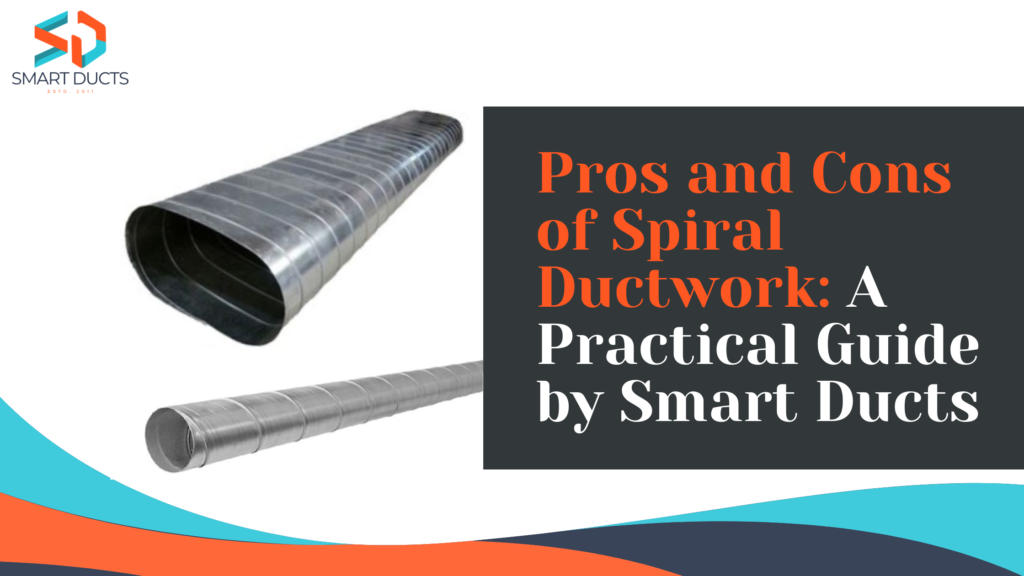
Spiral ductwork is a type of round HVAC duct manufactured using a continuous spiral seam. This construction method provides enhanced strength and airtightness compared to conventional duct systems. Spiral ducts are commonly used for air supply, return air, and exhaust applications in HVAC installations.
Pros of Spiral Ductwork
One of the most important advantages of spiral ductwork is superior airflow efficiency. The round shape allows air to move smoothly with minimal resistance, reducing pressure loss within the system. This helps HVAC units operate more efficiently and consume less energy.
Spiral ducts are structurally stronger due to their circular design and spiral seam construction. This strength allows them to handle higher air pressure without deformation, making them ideal for large commercial and industrial HVAC systems.
Another key benefit is reduced air leakage. Spiral ductwork typically has fewer joints and seams compared to rectangular ducts. Fewer connection points mean less air loss, improved system performance, and better temperature control.
Aesthetic appeal is another reason spiral ductwork is widely used. Exposed spiral ducts are often incorporated into modern interior designs, especially in offices, showrooms, restaurants, and commercial spaces. This can reduce the need for false ceilings and lower overall construction costs.
Installation is generally faster and more efficient. Pre-fabricated spiral duct sections allow for quicker alignment and assembly on site, saving time during project execution.
Cons of Spiral Ductwork
Despite its advantages, spiral ductwork may not be suitable for every application. One common limitation is space requirement. Circular ducts require more vertical clearance than flat rectangular ducts, which can be challenging in buildings with limited ceiling height.
Initial cost can be slightly higher, especially for small projects. While spiral ductwork often delivers long-term energy savings, the upfront investment may be more than basic rectangular duct systems.
Custom fittings and transitions can increase project complexity. In layouts with multiple direction changes or tight corners, spiral ductwork may require additional fittings, which can impact cost and installation time.
Spiral ducts are also less flexible in confined or irregular spaces. Rectangular ducts are sometimes easier to fit along walls, shafts, or narrow service corridors.
When Spiral Ductwork Is the Right Choice
Spiral ductwork is an excellent option for projects where airflow efficiency, durability, and visual appearance are important. It is commonly used in commercial buildings, industrial facilities, shopping complexes, and spaces with open ceiling designs.
At Smart Ducts, we recommend spiral ductwork for projects that require long duct runs, high airflow volumes, and reliable long-term performance.
Conclusion
Spiral ductwork offers multiple advantages including efficient airflow, strong construction, low leakage, and a modern appearance. However, factors such as space availability and initial cost should be carefully evaluated before selection.
With proper planning and professional manufacturing, spiral ductwork can significantly enhance HVAC system performance. Smart Ducts provides high-quality spiral duct solutions designed to meet industry standards and project-specific requirements, ensuring reliable and efficient air distribution.